

Wildebeest Migration Safari
Great Wildebeest Migration Safari — Witness Nature's Greatest Spectacle
Every year, over 1.5 million wildebeest, 250,000 zebra, and nearly half a million Thomson’s gazelle undertake the most extraordinary journey on earth. Driven by instinct and the search for fresh grazing, they move in a continuous, thundering circuit across the Serengeti and into Kenya’s Masai Mara — and back again. This is the Great Wildebeest Migration: the largest overland movement of mammals anywhere on the planet.
At Nyange Adventures, we have guided hundreds of travellers to witness this spectacle from the very best positions at every stage of the annual cycle. Our guides know the migration intimately — its patterns, its rhythms, and the precise locations that give you the most powerful experience at any given time of year.
Understanding the Great Wildebeest Migration
The migration is not a single event — it is a year-round, constantly moving cycle that follows rainfall and grazing across more than 3,000 km² of ecosystem. Understanding the different phases allows our specialists to position you at the right place at the right time:
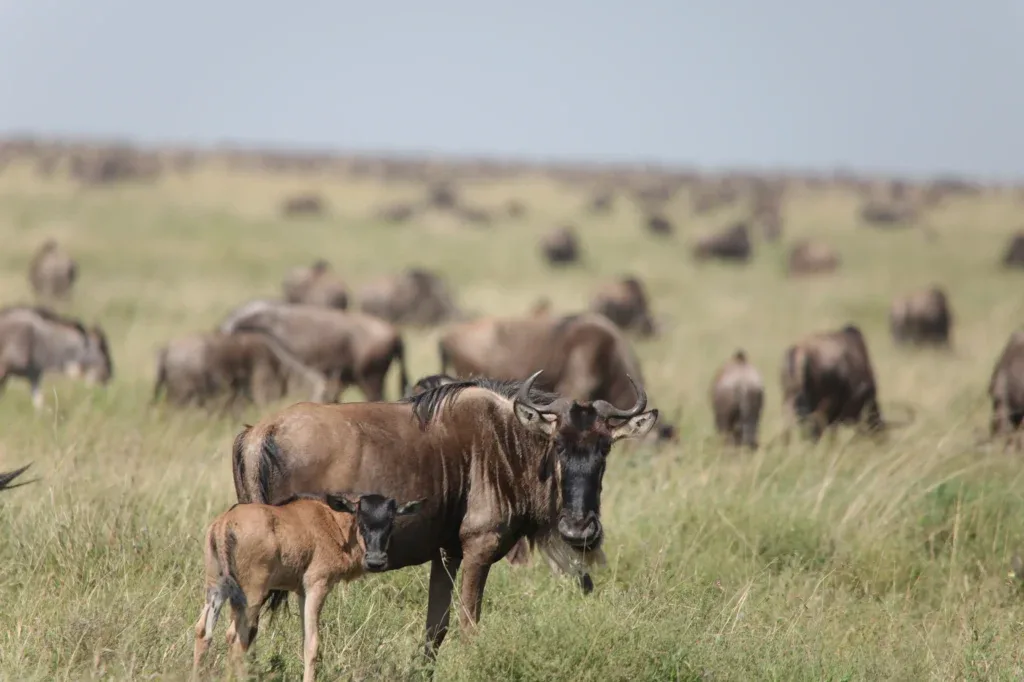
January – March: Calving Season (Southern Serengeti & Ndutu) Around 8,000 wildebeest calves are born every single day during this period — approximately half a million calves in the space of three weeks. This extraordinary concentration of newborns attracts the highest density of predators in Africa: lion prides, cheetah coalitions, spotted hyena clans, and leopards. If predator action is your priority, this is arguably the most dramatic period of the migration year.
April – May: The Long Rains (Central Serengeti) The herds drift north through the central Serengeti, moving through rain-soaked grasslands. This is a quieter period for tourism, with lusher landscapes and fewer visitors. Game viewing remains good, particularly for resident wildlife, though the migrating herds can be more dispersed.
June – July: The Grumeti River Crossings (Western Serengeti) Before reaching the Mara River, the migrating columns must first cross the Grumeti River — a stretch of water inhabited by enormous Nile crocodiles. These crossings are less famous than the Mara crossings but can be equally dramatic. The western corridor in June and July offers exceptional, often crowd-free wildlife viewing.
July – October: The Mara River Crossings (Northern Serengeti & Masai Mara) This is the iconic phase — the one that defines the migration in most people’s imaginations. Enormous herds gather on the banks of the Mara River, summoning the nerve to cross waters filled with crocodiles, before plunging in en masse in a chaos of hooves, spray, and natural drama. The northern Serengeti (Lamai, Kogatende) is the prime Tanzania-side location. Sightings depend on herd movements and cannot be guaranteed, but our guides are in constant communication with colleagues across the ecosystem to give you the best possible chance.
November – December: The Return Journey (Eastern Serengeti) The herds begin moving back south as the short rains arrive. The eastern Serengeti and Loliondo area offer rewarding game viewing during this transitional phase, with good concentrations of wildlife and some of Tanzania’s most beautiful light for photography.
Migration Safari Destinations
Northern Serengeti (Lamai & Kogatende) The premier Tanzania-side location for Mara River crossings. Access is by light aircraft from Arusha (approximately 1.5 hours). Our preferred camps in this region are positioned close to the main crossing points and are often inside the national park, maximising your time with the herds.
Southern Serengeti & Ndutu The calving grounds. During January and February, the short grass plains of the Ndutu area in the Ngorongoro Conservation Area are alive with newborn wildebeest and the predators that follow them. One of the most photogenic safari landscapes in Africa.
Western Serengeti (Grumeti) A remote and rewarding area that sees far fewer visitors than the central Serengeti. Exceptional game viewing year-round, with the Grumeti River crossings offering a dramatic and less-crowded alternative to the Mara in June–July.
Combined Tanzania & Kenya (Masai Mara) For travellers wishing to follow the migration across the international border, Nyange Adventures operates combined Tanzania-Kenya safari itineraries covering both the Serengeti and the Masai Mara. An extraordinary journey that gives you the full sweep of the migration ecosystem.
What Is Included in a Migration Safari?
- Private airport transfers and all internal road or air transfers
- Accommodation in hand-selected lodges and camps close to migration activity areas (full board)
- Dedicated private safari guide and 4×4 vehicle with pop-up roof
- All national park and conservation area entrance fees
- Game drives focused on migration activity as per your itinerary
- Real-time migration intelligence from our network of guides in the field
- 24/7 specialist support throughout your journey
Planning Your Migration Safari
The most important decision is when you travel, because that decides where in the Serengeti you need to be. Tell us your dates first and we will tell you honestly what the herds are likely to be doing and which camps put you closest to them.
If a river crossing is the main reason for your trip, build in flexibility. The herds can wait on one riverbank for days before they cross, so we add extra nights where crossings are most likely rather than moving you on too soon.
If you would rather see the calving season, late January and February in Ndutu and the southern Serengeti is the time to go. It is a quieter time to travel, and watching newborn calves with predators close by stays with many guests longer than a crossing.
For July to September, book six to twelve months ahead, because the northern Serengeti camps near the crossings fill first. Other months are more forgiving and can often be booked a few months out.
If a crossing is not essential, late November and early December are among the best-value times of the year: the same northern parks at lower prices than the peak months, with short afternoon showers that rarely cancel a game drive.
Sample Wildebeest Migration Safari Itineraries
5-Day Wildebeest Migration Calving in Ndutu
From $1,799 USD · Per person · 4 travellers
View itinerary & prices →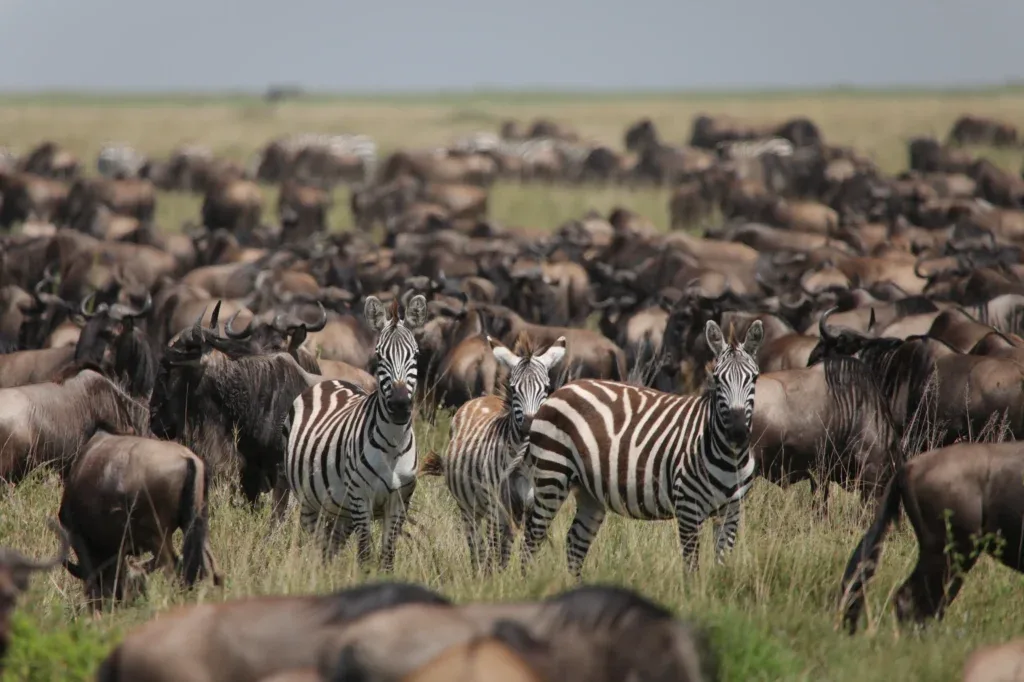
6-Day Western Grumeti River Crossing May-July
From $1,975 USD · Per person · 5+ travellers
View itinerary & prices →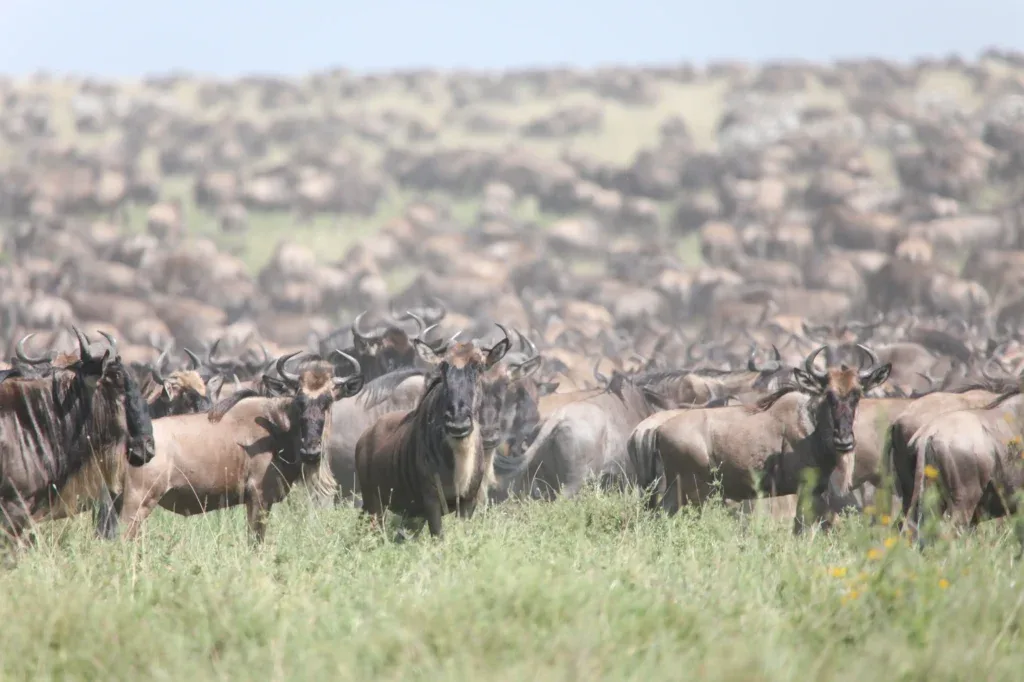
7-Day Western Serengeti Wildebeests Migration May-July
From $2,397 USD · Per person · 4 travellers
View itinerary & prices →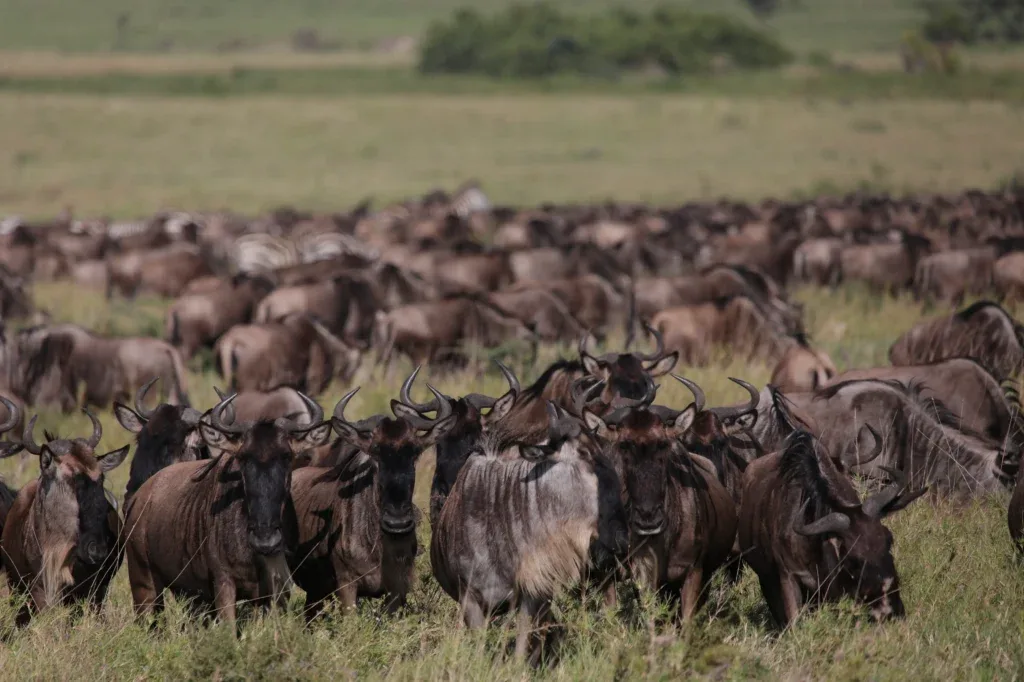
7-Day Mara River Crossing Serengeti Migration
From $2,452 USD · Per person · 4 travellers
View itinerary & prices →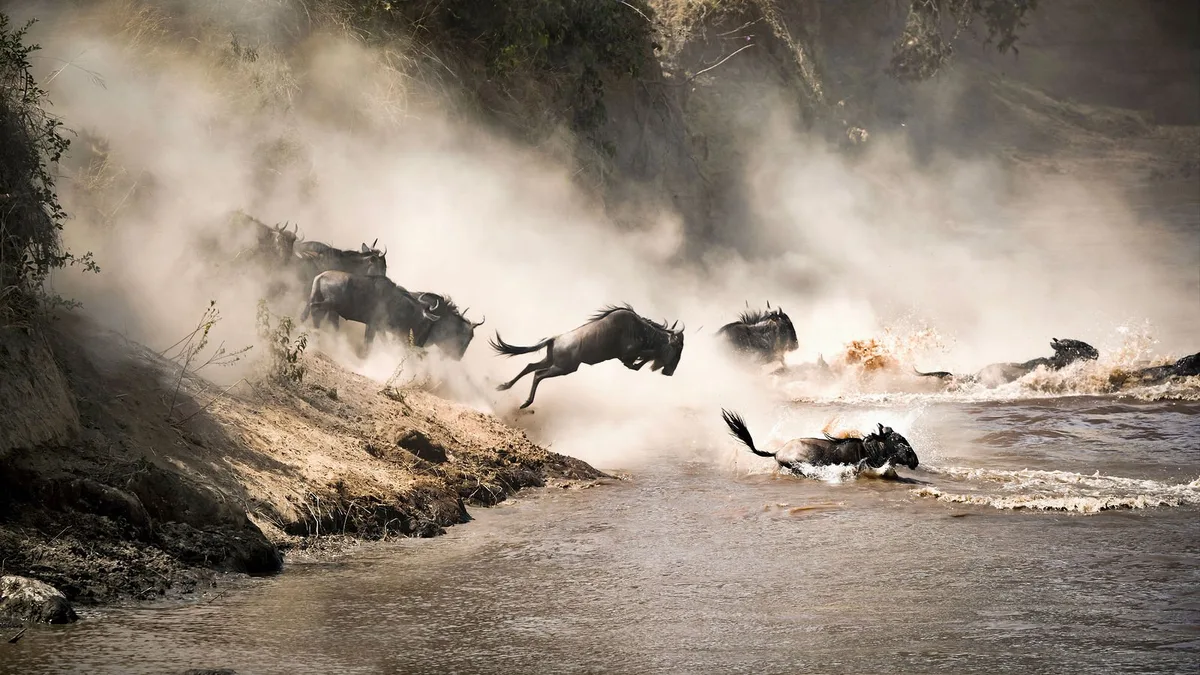
8-Day Serengeti Wildebeest Migration River Crossing
From $2,892 USD · Per person · 4 travellers
View itinerary & prices →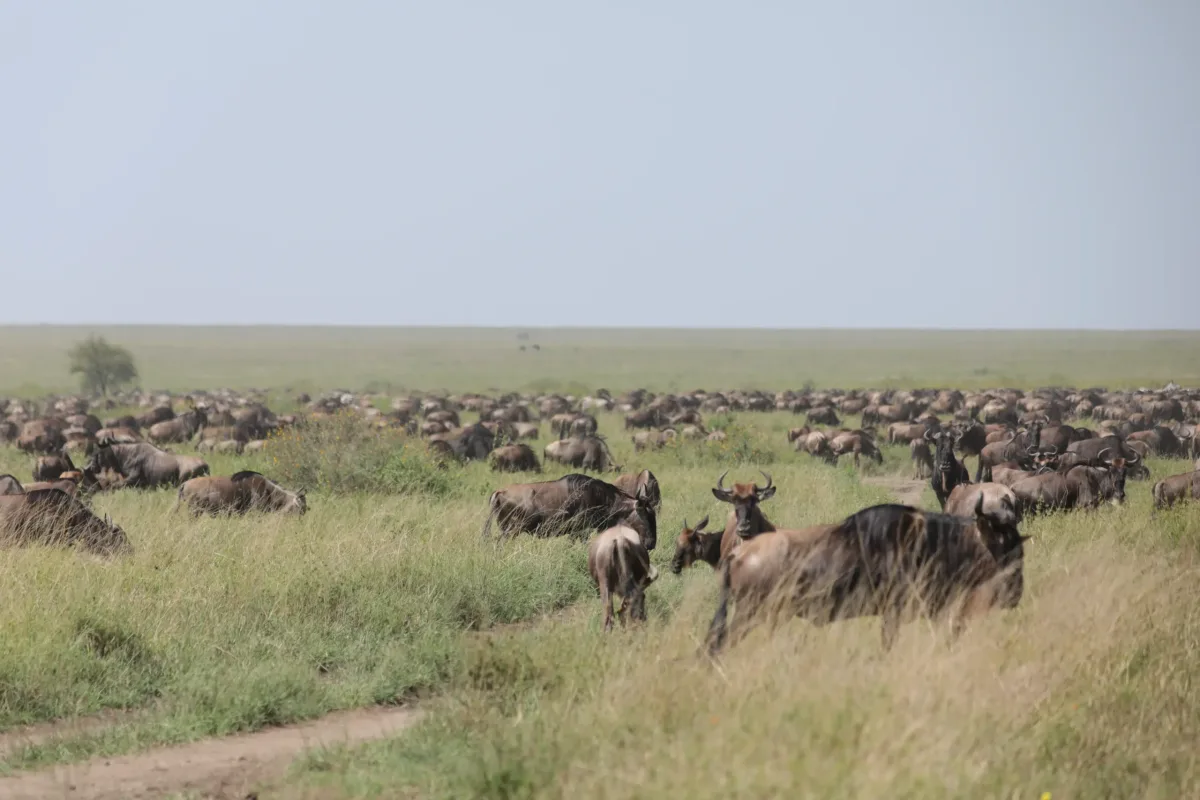
7-Day Serengeti Wildebeest Migration Camping Safari
View itinerary & prices →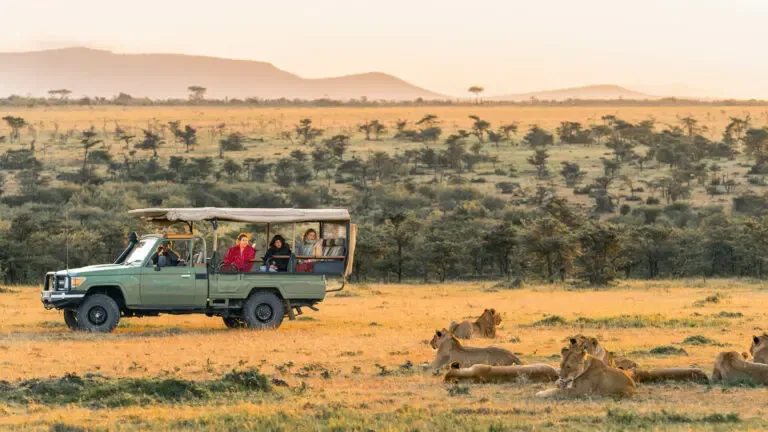
10-Day Kenya & Tanzania Safari – Maasai Mara, Serengeti & Ngorongoro
From $5,250 USD · Per person · 3+ travellers
View itinerary & prices →Each of these can be adjusted to your dates, budget and pace, or we can build a migration safari from scratch around the time of year you can travel.
Frequently Asked Questions
When is the best time to see the Great Migration?
It depends on what you want to see. July to October is the season for the Mara River crossings in the northern Serengeti. Late January and February is calving season in Ndutu and the southern Serengeti. In June and July the herds cross the Grumeti River in the western Serengeti.
Can you guarantee a river crossing?
No one can. Crossings depend on the herds, which can wait on the riverbank for days. Our guides stay in touch with colleagues across the ecosystem to give you the best chance, and we recommend extra nights in the north if a crossing matters most to you.
How many days do I need for a migration safari?
Our migration itineraries run from five to eight days, or ten if you combine the Serengeti with Kenya's Masai Mara. More nights in one area give you a better chance of being in the right place when the herds move.
Can I see the migration on a budget?
Yes. The 7-Day Serengeti Wildebeest Migration Camping Safari keeps costs down by using campsites instead of lodges, and the 7-Day Group Joining Safari: Mara River Crossing & Serengeti Migration shares a vehicle with other travellers. Late November and early December are also cheaper than the peak months.
Can I combine the migration with Kenya's Masai Mara?
Yes. We run combined Tanzania and Kenya itineraries that cover both the Serengeti and the Masai Mara, so you can follow the herds across the border.